

How to Evaluate a Residential Property Before Investment In India
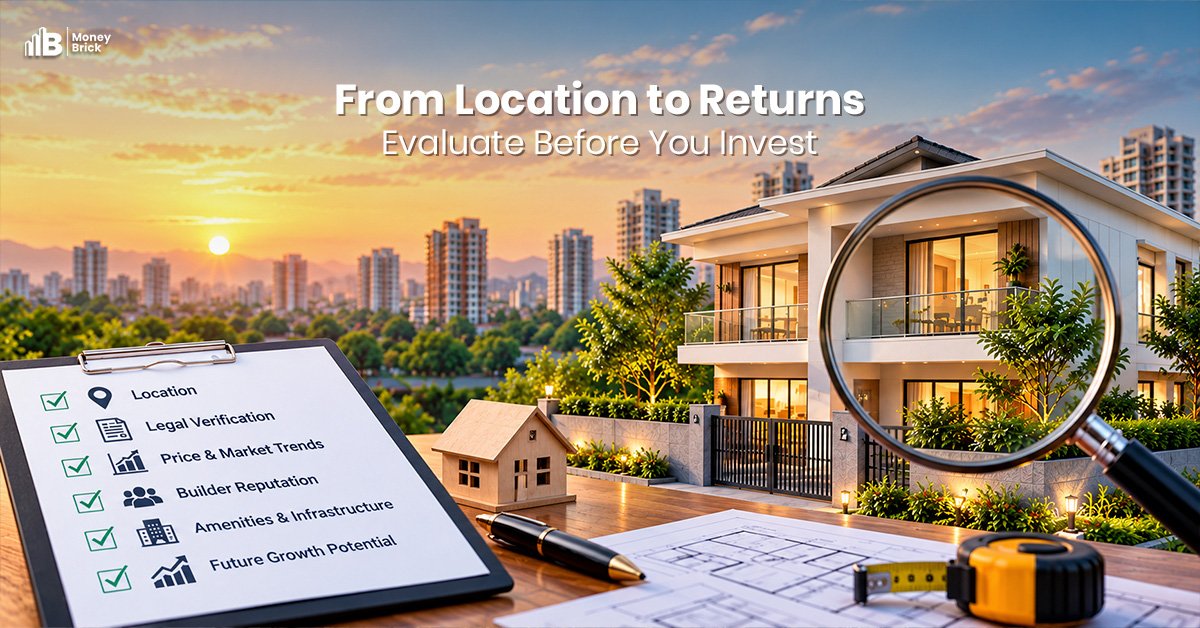
In theory, buying an investment property is easy: you choose a location, pay for it and let time do the hard work. But it is rarely that simple to invest in residential property. It’s about the homework you performed before you signed. Good buy vs. bad buy. Whether it is in an urban flat, a villa on a plot or a holiday house in the hills, a good investment assessment is what keeps your money safe and your expectations grounded.
In this tutorial, we will lead you through a realistic property appraisal that you may do before taking the plunge into residential property investment in India. We will look at location, amenities, legal checks, builder credibility, pricing, returns and exit alternatives. By the end you will have a basic residential property evaluation checklist that you can apply over and over again on every property you shortlist.
Quick Answer: How Do You Assess a Residential Property for Investment?
Here’s the short version on how to appraise a residential property before investing in India. Here are seven checks for your investment review:
- Location and connectivity: Is the need real and is it increasing?
- Amenities and quality of construction: “Will tenants and future buyers still like the place in ten years?”
- Legal title and RERA registration: Is the property and the project clean?
- Builder credibility: Has the builder ever delivered on time?
- Pricing relative to the market. How does the price compare with similar properties in the area?
- What rental yield and capital appreciation can you realistically expect? Anticipated returns and total costs
- Liquidity and exit strategy: Can you rent or resell without waiting forever?
This property appraisal should be provided with every step of residential property investment therefore we will take them one by one.
Importance Of Getting Residential Property Evaluated In India
India’s residential real estate is not a one-market. Prices, restrictions, stamp duty and rental demand vary from state to state, and even from one suburb to another in the same city. And a project that is booming in one micro-market can quietly stop in another. That’s exactly why residential real estate in India rewards those who do their research before they spend.
A thorough residential property assessment helps you:
- Don’t overpay for a house that doesn’t deserve its price tag
- Recognize legal and documentation risks before any money changes hands
- Use the same property evaluation checklist to compare two or more choices
- Set expectations you can truly meet
- Plan your finances around the real cost of owning, not simply the sticker price
It’s essentially about doing your homework on what could be the biggest purchase you make in your life. “Honestly, a disciplined investment evaluation is the cheapest insurance a buyer can buy.
Know Your Goal Before You Get Into Residential Property Investment
Before you open one listing, ask yourself why you’re investing at all? Your answer determines whether properties make sense and it defines the investment evaluation you’ll do.
Shared Goals of Residential Real Estate Investors
- Rental income: You want a steady monthly revenue flow from tenants
- Capital appreciation: You want to sell for more later
- Personal usage plus income A holiday property you use for a few weeks a year and rent out the rest of the time
- Diversify your wealth: You want a physical asset next to equities, gold or fixed deposits
Someone pursuing rental yield will be most concerned with tenant demand and low vacancy rates, while a buyer focused on appreciation will examine future infrastructure and supply. If you’re looking for a second home lifestyle, accessibility will be as important as returns. Writing your aim down sounds almost too simple yet it makes every step later on of residential property investment easier.
Step 1: Know the Location and Micro Market
Location is the key driver of long-term value in residential real estate investing. But a “good location” is more than a famous address. And a great residential property evaluation always starts right here.
What to Look for in a Location
- Connectivity: How near are highways, railroad stations, airports or metro lines?
- Social infrastructure: Are schools, clinics, marketplaces and shops for daily needs available and accessible?
- Employment or tourism demand: Are there IT hubs, industrial belts or tourist circuits in the vicinity that keep demand steady?
- Infrastructure in the horizon: Have any developments such as highways, flyovers or transit been mentioned that could raise values over time?
- Stock levels: Are you sitting on too many unsold items in the same pocket? That can keep prices down for years.
All of these points will feed into your general property assessment, so make notes as you travel.
See the Neighborhood in Real Life
Photos and maps only convey half the story, so go visit the place for yourself, and try more than one time of day. Listen out for water supply, traffic, noise, street lighting and general care. Talk to neighbors, businesses and local brokers if you can. A property that appears perfect in a brochure might feel quite different on a busy weekday evening and a few site visits like these make any residential property investment decision much more solid.
If you are open to a lifestyle asset, hill-station choices are worth a look too. Take Ulhas Vilas, for example. It shows how a picturesque location, with good connectivity, can strike a balance between personal usage and rental income potential. This makes it a relevant example of residential real estate in India outside the main metros. If you are looking for a compact, rental friendly unit, the Studio Apartment at The Vilasya in Kufri is a good reference point when you stack up the size, location and surroundings against your shortlist. Whatever you decide, a property appraisal cannot be complete without a site visit.
Step 2: Evaluate Amenities, Quality of Construction and Maintenance
Good facilities increase rental demand and resale value and make the home better to live in, which is also important even if you plan to just rent it out. That is why amenities should be included in every investment appraisal.
Amenities to Check Out
- Security & Safety: Gate Entry, CCTV & Fire Safety Systems
- Utilities: good drainage, reliable water supply, power back up
- Common facilities: parking, lifts, manicured spaces, clubhouse or play areas
- Internet and mobile connectivity: More and more vital for tenants and distant employees
Build & Construction Quality
With residential property investment, build quality will influence rent and resale value, so examine the quality of fittings, finishing and structural work closely. Look for moisture, cracks, uneven floors, and poor ventilation. If the project is still under construction, visit the site and compare the progress with the promised timeframe. A hands-on examination of an investment also includes looking at the age of a resale unit, the condition of its plumbing, wiring and common areas.
This advice on the top features to look for when buying a holiday home accompanies a wider checklist of things to prioritize inside and around the home, and is a useful read.
Community Management & Maintenance
In a well-run community, the value of property usually stays the same. Find out about the monthly maintenance charges, how the funds are administered and if the residents’ association is in any disagreement with the constructor. High maintenance expenditures nobody can explain eat right into the earnings from your residential property investment.
Step 3: Check the legal title and paperwork
A gorgeous property is still a bad investment if the paperwork is flimsy. Don’t miss out on this portion of your residential property evaluation, and consider hiring an expert property lawyer to go through all this with you.
Documents to look at
- Title deed – seller’s proof of ownership and a clear line of previous ownership transfers
- Encumbrance certificate: Shows any loans or legal claims against the property
- Verified Building Plan: Ensures compliance with approved construction standards
- Occupancy or completion certificate: Essential for residences ready to move into
- Land use and conversion status : Confirms land is approved for residential usage
- Tax and utility receipts: Property tax and power bills should be current
- Sale agreement and payment schedule: Know the provisions on delays, fines and cancelations
RERA Registration Confirm
Under the Real Estate (Regulation and Development) Act, most new residential developments above the specified size are required to register with the state RERA authority. Registration allows you access to authorized plans, promised timelines and a formal mechanism for complaints if something goes wrong. This one check takes out a huge chunk of risk for residential real estate in India. For example, you can check project details on your state’s portal like HP RERA for projects in Himachal Pradesh. Just make sure that the registration number in the ad of the builder is the same as in the official site and consider this as a non-negotiable part of your investment evaluation.
Step 4: Evaluate the Builder or Seller
A developer’s history can frequently be a good predictor of how your own purchase will turn out. Don’t only look at the marketing material and the slogans. A builder’s history is a fundamental part of any property assessment.
- Past projects: Review construction timelines and quality of work of past developments
- Legal history: Check for any lawsuits or customer complaints that are pending
- Owner Testimonial: Walk Through a Completed Project and Speak with the Homeowners
- Financial stability is particularly critical for projects under construction, as delays can tie up your resources for years
If you are buying a resale home make sure you know who the seller is, that they own the property and inquire why they are selling. A real vendor will answer directly and provide documents without reluctance.
Ready to Move Vs Under Construction
- Under construction – Generally cheaper with tiered payments but has delivery risk and earns no rent until completion
- Move in ready: you pay more up-front but know exactly what you are buying and can start earning rental income right away.
Which one suits your residential property investment should be decided by your goal and your appetite for risk.
Step 5: Compare Your Pricing with the Market
Pricing is at the heart of any assessment of investment in residential real estate in India. The fair price is just the actual sale or rental price of comparable homes in the area.
How to Tell If a Price Is Fair
- Benchmark the price per square foot against at least three comparable listings in the same micro-market
- Don’t simply look at what’s on the market – look at what sells
- Take into account age, floor, view, facilities and building quality
- Watch out for pricing well under market, which could mean legal or structural issues
Count the Invisible Costs
The listed price is seldom the total cost of investing in residential property. Put these in your budget:
- Stamp duty and registration fees (varies from state to state)
- GST applied on under-construction properties
- Maintenance deposits and communal levies
- Membership of the club and parking fees
- Interiors, furnishings and legal costs
- Brokerage if you are using an agent
These upgrades can add a considerable proportion to your ultimate outlay so consider them from the outset of your property evaluation.
Step 6: Calculate Your Residential Property Investment Returns
Ultimately, investment appraisal is about return. Be realistic, and be a little conservative.
Rental Yield
The rental yield is the annual rent divided by the purchase price of the property, expressed as a percentage. In India, rental yields on residential real estate are low single digits in much of the country, so rental revenue by itself hardly tells the complete story. Holiday and tourist-driven markets may operate differently, with increased seasonal demand but also periods of vacancy.
Capital growth
Capital appreciation Location, infrastructural growth and wider market cycles; Don’t count on consistent double digit growth. Treat each projection as an estimate, not a promise. Run your residential property investment strategy against a slower-growth scenario.
A Return Checklist Made Easy
- Expected monthly rent and probable periods of vacancy
- Annual upkeep, property taxes, and repair fees
- If you are financing, home loan interest rate and EMI- strain.
- Expected time span before you intend to sell
- Capital gains when you sell Rental income tax
Financing and Tax Implications
Interest rates impact your results so keep a watch on statements from the Reserve Bank of India. Check out offers from a few of lenders and see what percentage of your income goes toward the EMI. Only the Income Tax Department is the reliable source for tax treatment of rental income, home loan interest and capital gains on property. Tax rules do change therefore you should check the current position with a certified tax professional before investing.
Step 7: Assess Liquidity and Exit Plan
Consider how easy it would be to rent or sell the property in five or ten years. Real estate isn’t as liquid as most other assets, thus liquidity is important and should be included in all residential property evaluations.
- In general, it’s easier to abandon established, well-connected locations with constant buyer demand.
- Remote or oversupplied areas can take longer to sell, often at a discount.
- Unit form and size influence demand and compact, well-planned residences tend to appeal to more tenants and purchasers
- Good paperwork speeds up and simplifies resale
Having a strategy in place for what you’ll do with the home when you decide to sell – whether that’s renting it out long-term, holding it for family use, or just selling it on – prevents you from making hasty decisions later down the line in your residential property investing journey.
Typical Red Flags in Residential Property Investment
When you are assessing your property, look out for these warning signs:
- A seller who won’t give you documents or pressures you to decide fast
- Oral promises not contained in the written contract
- Prices significantly below comparable houses with no apparent rationale
- RERA registration details not found or mismatch
- Unapproved additions, contested boundaries or ambiguous land use
- A builder known for delays and complaints
If you see more than one of them, step back and think about it.
Common Investment Mistakes to Avoid
Most mistakes in residential property investment are caused by skipping steps, thus try to avoid these:
- Depending on a broker’s sales pitch without doing your own due diligence
- Not accounting for hidden costs and recurring costs
- Offers for a limited time forcing you to buy fast
- Cancel the site visit
- Stretching your resources, taking out a debt that you can barely service
- Relying solely on anticipated appreciation to justify the purchase
- Putting all of your savings into one home
A Practical Checklist For Commercial Property
Before you sign anything, be sure you can answer “yes” to all of the following:
- Clear title RERA registration valid
- Price is consistent with other properties in the area
- The builder/seller has a good track record
- Total cost with taxes and fees is in your budget
- The region shows rental demand and resale possibilities
- You have seen the property and talked with neighbors
- If things change, you have an exit strategy
Frequently Asked Questions (FAQ)
The first thing to check before investing in a residential property is its location.
LEGAL TITLE & RERA REGISTRATION No amount of location attractiveness or reduction to market value will make the sale worthwhile if ownership or approvals are uncertain. Request for the title deed, encumbrance certificate and authorized plan and cross check the RERA number in the builder’s advertisement with the official state portal. Once the paperwork checks out, you may move on to location, pricing and returns in your residential property evaluation.
How can I tell if a residential property is priced right?
Compare the price per square foot to at least three comparable properties in the same micro-market, looking at recent recorded sales rather than just asking prices. Adjust for age, floor, view and amenities, all of which can move value appreciably. If the rate is well below market, find out why before you get too thrilled. An independent valuer can improve the valuation of your home for a small cost.
Is residential property a suitable long term investment in India?
When demand is constant and infrastructure is growing, it can be. In India, returns on residential real estate can vary greatly by city, micro-market and project, thus a rigorous examination of an investment is far more important than overall optimism about the market. Property requires a longer holding duration than most financial assets as buying and selling need time, taxes and transaction expenses. If you can hold for several years and pick the right location, residential property investing can be a good portion of a diversified portfolio.
What else should I budget for over the property price?
Factor in stamp duty, registration charges, GST where applicable, maintenance deposits, parking, interiors and legal fees. Stamp duty is state-dependent and occasionally based on the buyer’s profile, so check the current rate in the area where the property is located. A good plan is to total up all the costs before you buy – and then set a little cash aside for repairs or vacancies after you have bought.
Do I need to get a lawyer or an independent expert?
Yes, it is worth it. A property lawyer can examine the title, evaluate the sale agreement and highlight any terms that are advantageous to the seller. If you are anxious about the quality of building, you can have the construction checked by a civil engineer and the fair market value confirmed by an independent valuer. Together, these inspections normally amount to a modest percentage of the value of the property and help to reinforce any residential property appraisal by discovering legal issues or an overpriced purchase early on.
What is better ready to move or under construction property?
It is contingent upon what you want and how much risk you want to take. Units under construction are sometimes cheaper with tiered payments but carry the risk of non-delivery and do not earn rental income until completed. The ready-to-move-in homes may be more expensive but they allow you to see the actual property, start earning rent immediately and avoid building delays. When you are investing in a project that is under development, you need to evaluate the builder’s track record and the RERA-registered schedule as a part of your investment assessment.
Conclusion
A sound residential property investment is based on fact, not hype. Set your aim, research the location, look at amenities, review legal papers, assess the developer, evaluate the pricing and calculate reasonable return statistics. A full residential property inspection could take a few weeks but it can save years of savings. Follow this property evaluation procedure and you will offer yourself the best chance of choosing a home that keeps its value, whether you are new to residential real estate in India or adding to an existing portfolio.